The Future of Hearing Aids: When Better Hearing Meets Real‑Time Translation
For decades, hearing aids focused on one core mission: helping people hear more clearly. But the next generation of devices is evolving far beyond simple amplification. Thanks to rapid advances in artificial intelligence, sensors, and cloud connectivity, hearing aids are becoming powerful wearable computers and one of the most exciting frontiers is automatic language translation.
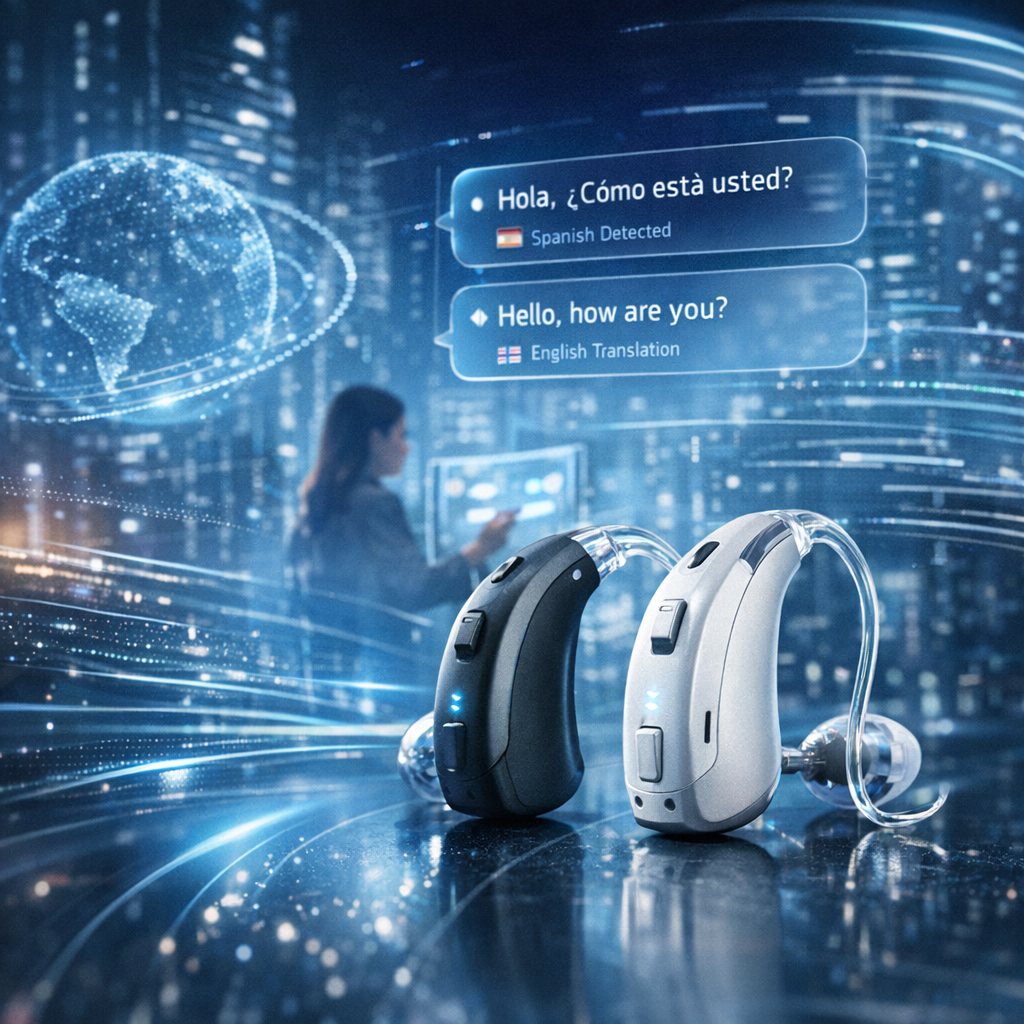
We’re entering a moment where hearing technology doesn’t just restore hearing. It expands it.
From Amplifiers to Intelligent Companions
Modern hearing aids already use AI to:
- Separate speech from background noise
- Adapt to changing environments
- Learn a user’s listening preferences
- Reduce listening effort
These features were once considered futuristic. Now they’re standard. The next leap is even more ambitious: turning hearing aids into tools that help people navigate a multilingual world.
Why Automatic Translation Is the Next Big Step
Imagine sitting in a café in another country and understanding the conversation around you instantly. Or chatting with someone who speaks a different language without needing to pull out your phone. For millions of people with hearing loss, this isn’t just convenient but it’s empowering.
Automatic translation inside hearing aids could:
- Break down communication barriers
- Support travel and international work
- Help newcomers integrate into new communities
- Make everyday interactions smoother and more inclusive
And because hearing aids already sit discreetly in the ear, they’re the perfect device for this kind of seamless, real‑time experience.
How It Works Behind the Scenes
The translation itself doesn’t happen inside the tiny hearing aid hardware. Instead:
- The hearing aid connects to a smartphone.
- The phone’s AI processes speech and translates it.
- The translated audio streams directly into the hearing aids.
This combination of powerful cloud AI + discreet wearable audio is what makes real‑time translation possible.
As AI models get faster and more accurate, the translation delay shrinks. What once took seconds could soon feel instantaneous.
A Future Where Hearing Aids Do More Than Hear
Automatic translation is just one example of how hearing aids are becoming multi‑purpose devices. In the coming years, we may see features like:
- Context‑aware listening, where the device understands the situation and adjusts automatically
- Health monitoring, such as fall detection or heart‑rate tracking
- Cognitive support, helping reduce listening fatigue and mental load
- Augmented hearing, enhancing subtle sounds or filtering out unwanted ones
Hearing aids are evolving from medical devices into intelligent companions — quietly supporting people in ways that go far beyond hearing loss.
Why Translation Could Be a Game‑Changer
For many people, hearing loss already creates communication challenges. Add a language barrier on top of that, and everyday interactions can become stressful. Automatic translation has the potential to:
- Restore confidence
- Encourage independence
- Strengthen social connections
- Open doors to new experiences
It’s not just a technological upgrade. It’s a quality‑of‑life upgrade.
Looking Ahead
We’re still in the early days, but the direction is clear: hearing aids are becoming smarter, more connected, and more capable. Automatic translation is one of the most promising innovations on the horizon – a feature that could redefine what hearing technology means in a global, multilingual world.
The future of hearing aids isn’t just about hearing better.
It’s about living bigger.